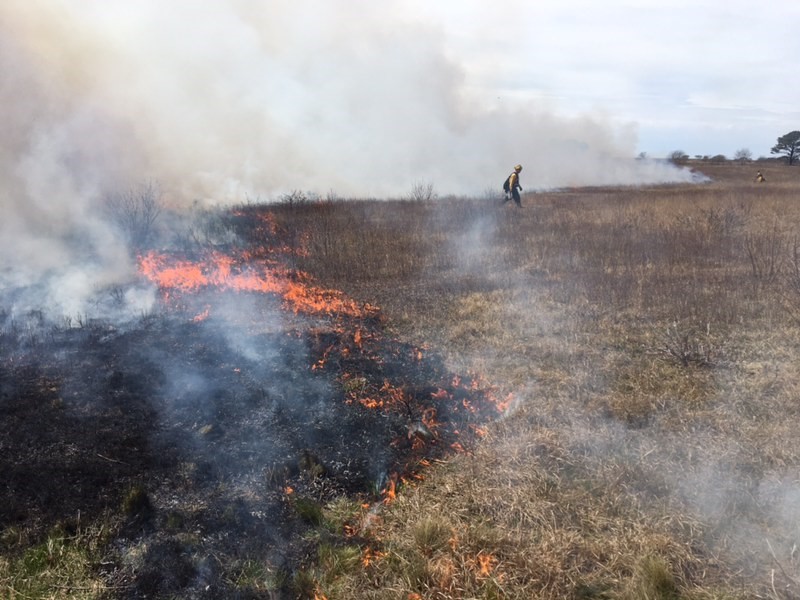
Fire and conservation might seem like an odd couple, but their relationship is an integral piece of how some habitats function. Long before prescribed burning became a land management practice, fire was a natural force shaping landscapes across the world. On Nantucket, it was almost entirely human-made: Native Americans intentionally used fire to clear land for agriculture, hunting, and settlement. Today, the Land Bank carries on that tradition using prescribed burns to recreate the ecological benefits that fire has provided for centuries. As it turns out, many of Nantucket’s rarest habitats don’t just survive fire, they benefit from it. These benefits are wide-ranging, from promoting seed germination to reducing the risk of dangerous wildfires. Prescribed burning can be seen through the lens of a valuable, carefully managed reset button for the landscape.
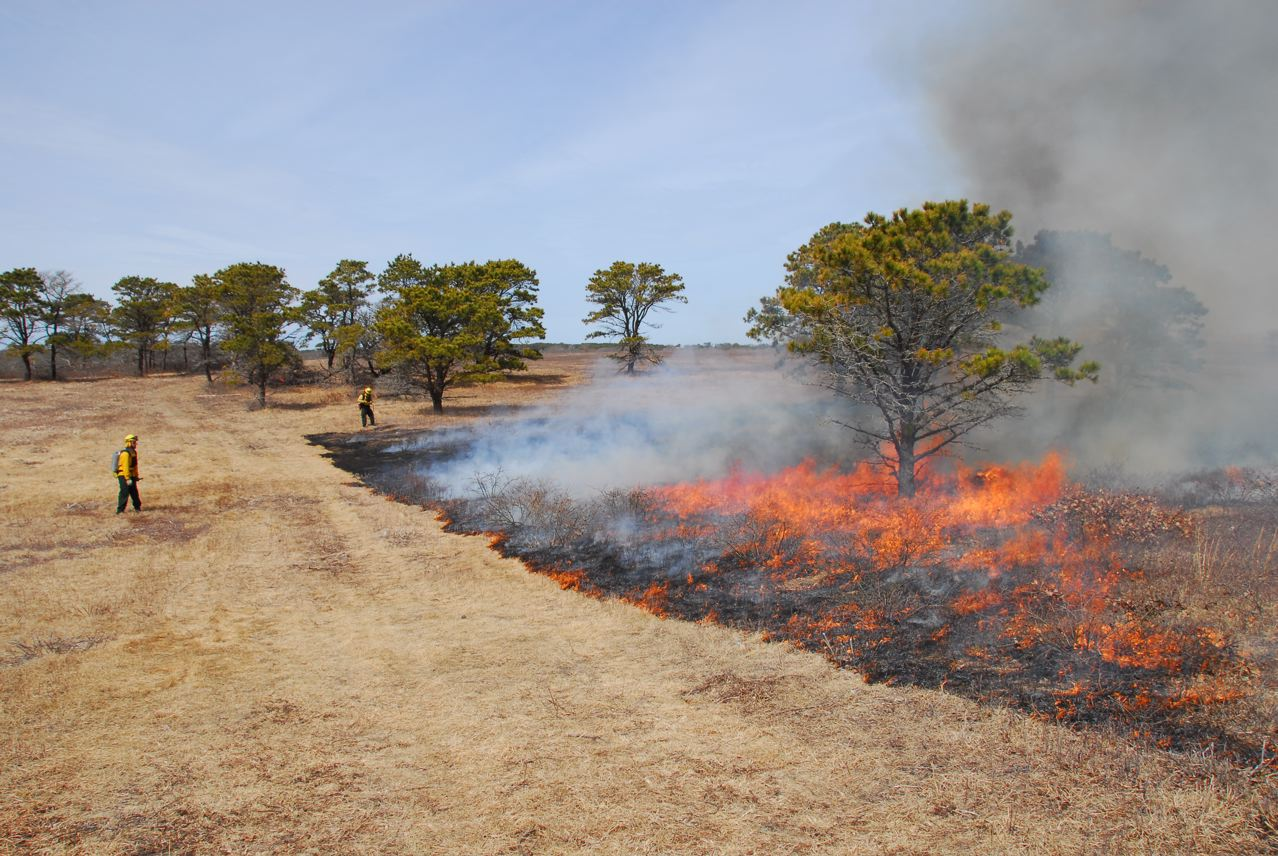
Prescribed fire is particularly powerful tool for the management of early successional ecosystems such as the sandplain grasslands and coastal heathlands found at Smooth Hummocks and Head of Plains. Dense vegetation can crowd out the sun, but fire clears the way, letting light reach the ground and giving native plants the chance to colonize and regenerate.
Mowing, while an essential tool, produces a tidy and uniform result while on the other hand, fire is the exact opposite. Because fire burns hotter in some spots than others, it leaves behind a natural patchwork of habitat types. This mosaic of shrublands and grasslands would be nearly impossible to replicate with machinery. The diversity it produces is a magnet for wildlife. Songbirds, small mammals, insects, pollinators, and birds of prey like the northern harrier all thrive in these varied landscapes.
The aftermath of a fire contributes to ecosystem health as well. Ash acts as a rich natural fertilizer, jumpstarting regeneration across the plant community. Some native Nantucket species, like Blue-eyed grass (Sisyrinchium fuscatum) and lowbush blueberry (Vaccinium angustifolium) for example, flourish following a burn. Additionally, by clearing out dry vegetation and debris, prescribed fires make the landscape far less hospitable to the kind of runaway wildfires that can occur in dense thickets.
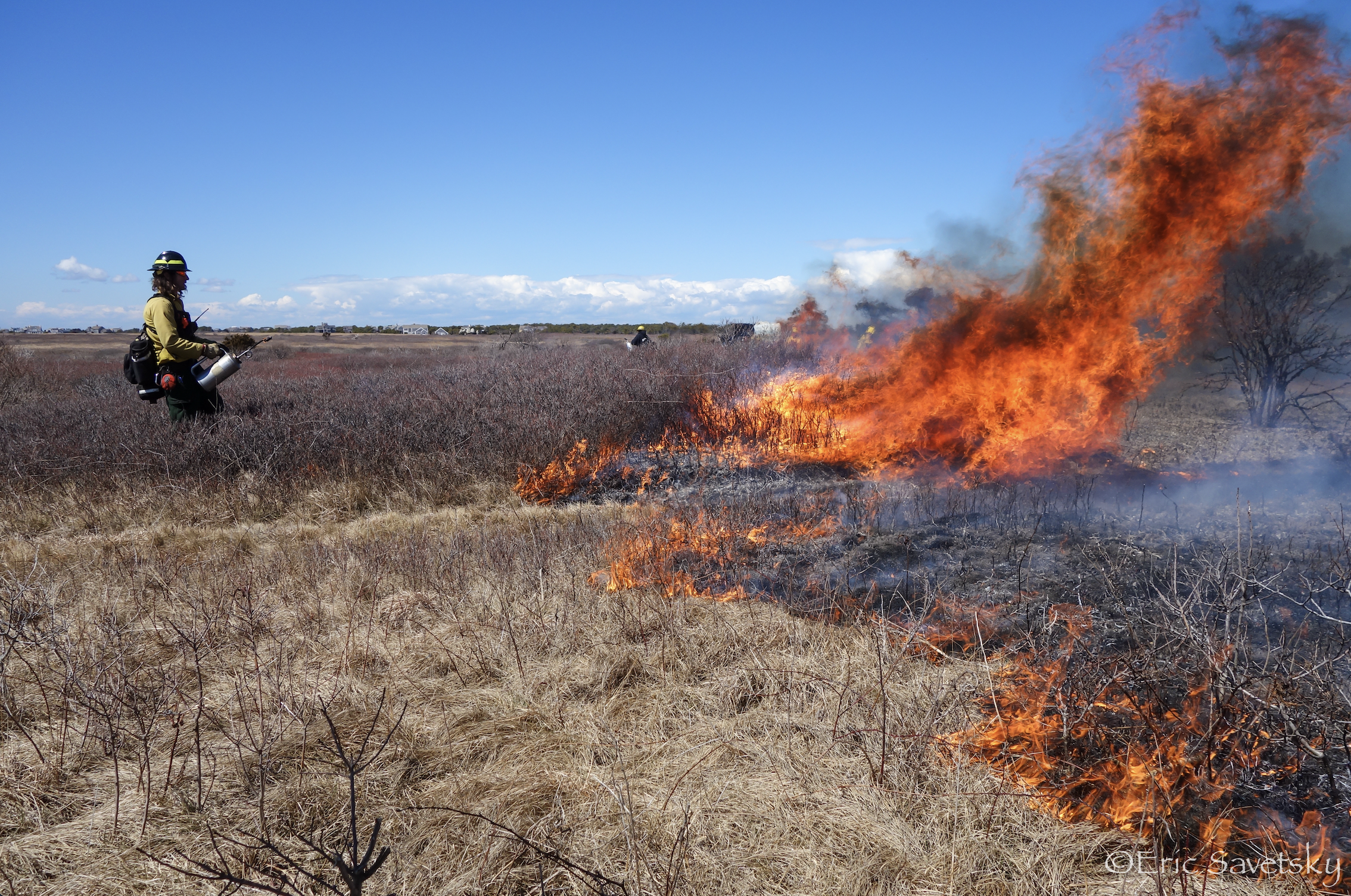
Prescribed fire season comes twice a year on Nantucket, in the spring and fall. Every prescribed burn the Land Bank undertakes is carried out by certified wildland firefighters and is dependent on support and collaboration from the Massachusetts Department of Environmental Protection, the Massachusetts Department of Conservation & Recreation and the Nantucket Fire Department. This season, the Nantucket Land Bank is hoping to perform prescribed burns during April and May if the correct weather occurs. To learn more about how the Land Bank manages Nantucket’s remarkable habitats and our work with prescribed burns, visit the habitat management page on our website, or stop by our office at 22 Broad Street — we’d love to talk about it. You can also reach us by phone at 508-228-7240.